News



On January 2, 2024, Professor Shimin Zhao from the Institute of Metabolism & Integrative Biology, Fudan University and his collaborators published a research article entitled “Hypoxia Induces Mitochondria Protein Lactylation to Limit Oxidative Phosphorylation”in Cell Research.
Oxidative phosphorylation (OXPHOS) consumes oxygen to produce ATP. However, the mechanism that balances OXPHOS activity and intracellular oxygen availability remains elusive. Here, we report that mitochondrial protein lactylation is induced by intracellular hypoxia to constrain OXPHOS. We show that mitochondrial alanyl-tRNA synthetase (AARS2) is a protein lysine lactyltransferase, whose proteasomal degradation is enhanced by proline 377 hydroxylation catalyzed by the oxygen-sensing hydroxylase PHD2. Hypoxia induces AARS2 accumulation to lactylate PDHA1 lysine 336 in the pyruvate dehydrogenase complex and carnitine palmitoyltransferase 2 (CPT2) lysine 457/8, inactivating both enzymes and inhibiting OXPHOS by limiting acetyl-CoA influx from pyruvate and fatty acid oxidation, respectively. PDHA1 and CPT2 lactylation can be reversed by SIRT3 to activate OXPHOS. In mouse muscle cells, lactylation is induced by lactate oxidation-induced intracellular hypoxia during exercise to constrain high-intensity endurance running exhaustion time, which can be increased or decreased by decreasing or increasing lactylation levels, respectively. Our results reveal that mitochondrial protein lactylation integrates intracellular hypoxia and lactate signals to regulate OXPHOS.
This research was built upon a series of previous findings from the team. In a cover article entitled “Sensing and Transmitting Intracellular Amino Acid Signals through Reversible Lysine Aminoacylations” published in Cell Metabolism in 2018, the collaborative team originally discovered that numerous metabolites including lactate are capable of protein modification (Figure 1).
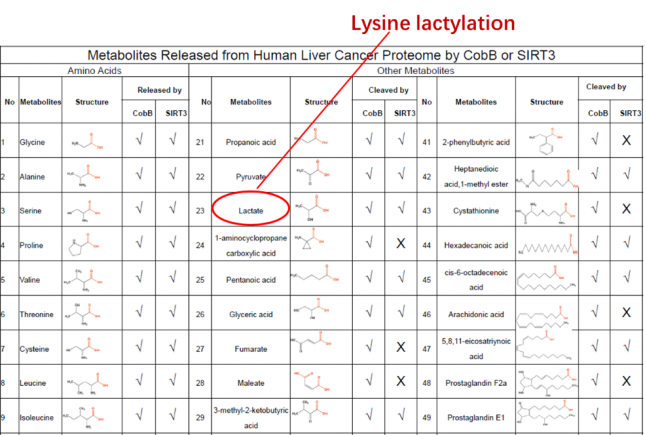
Figure 1. The team first reported in Cell Metabolism in 2018 that lactate can modify protein lysine residues.
Link: https://doi.org/10.1038/s41422-023-00864-6
复旦大学 代谢与整合生物学研究院 版权所有
Copyright@2018fudan.edu.cn All rights reserved.
上海市杨浦区淞沪路2005号。邮编:200438。电话:021-31242078,021-31242079
 Fudan Email
 Fudan Ehall